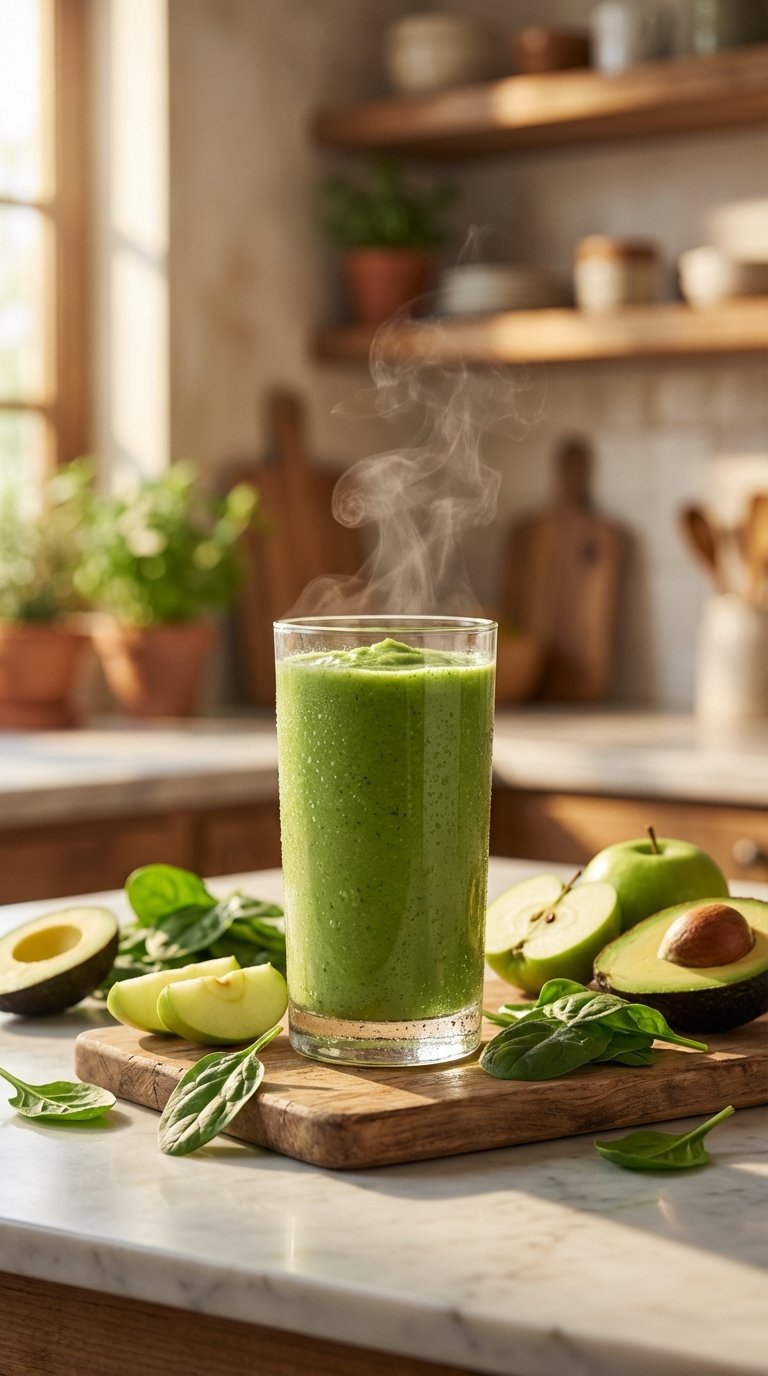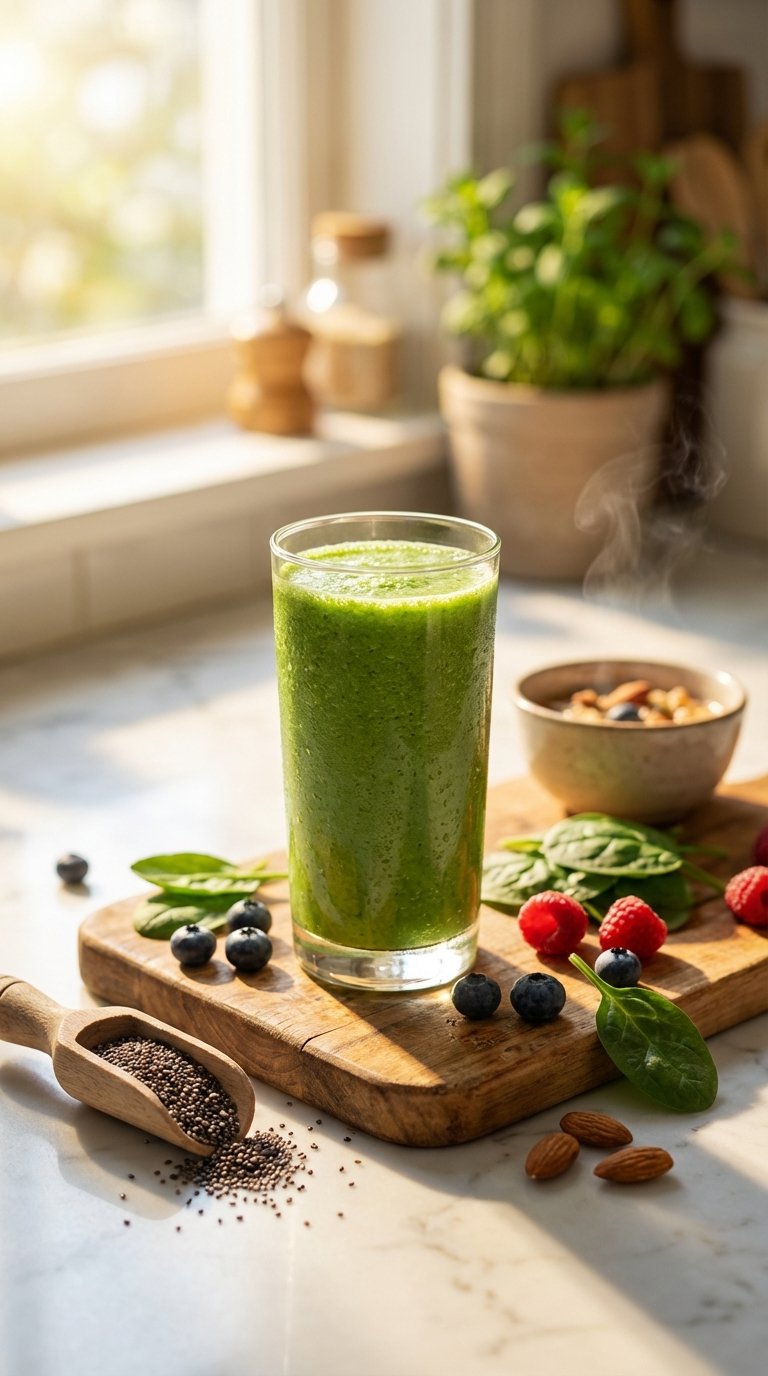
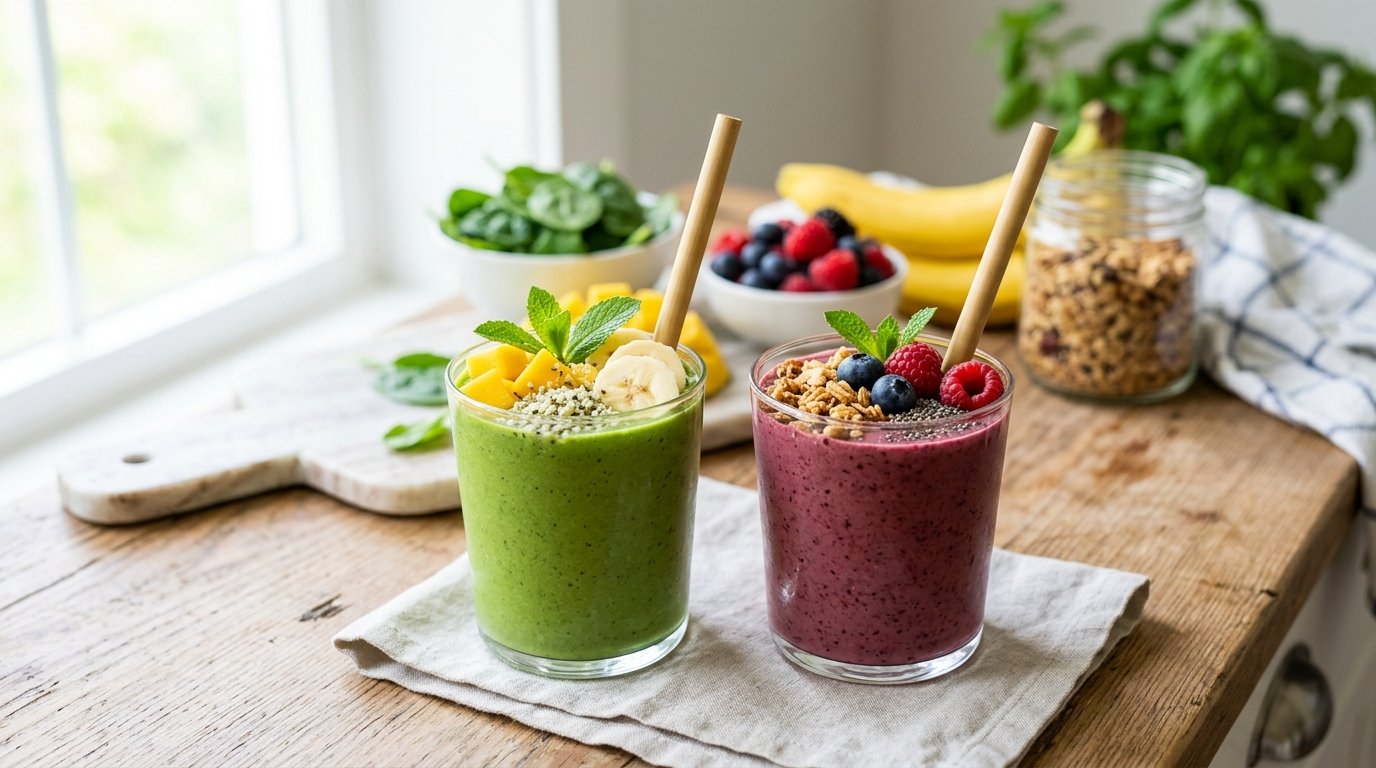
Delicious Healthy Smoothie Recipes for Busy Lives
Introduction: Blend Your Way to Better Health with Delicious Healthy Smoothies
We’ve all been there: staring blankly into the fridge on a rushed weekday morning, desperately hoping a nutritious breakfast will magically assemble itself. Enter the smoothie. When made correctly, it is the ultimate life hack for busy people who refuse to compromise on nutrition.
Why healthy smoothies are a nutritional powerhouse for modern living
In our fast-paced world, sitting down for a balanced meal isn’t always feasible. Healthy smoothies condense hours of meal prep into minutes of blending. They offer a highly bioavailable, drinkable format that delivers essential vitamins, minerals, and macronutrients straight to your system without slowing you down.
What this ultimate guide to healthy smoothie recipes will unlock for you
If you’ve ever thrown a handful of spinach and a banana into a blender only to end up with a murky, bitter sludge, you’re in the right place. This guide is going to remove the guesswork. You’ll learn the exact frameworks, ratios, and insider secrets that food bloggers and nutritionists use to create blends that taste like dessert but act like a multivitamin.
The difference between ‘just a smoothie’ and a truly ‘healthy smoothie’
Here is a hard truth: many smoothies are just milkshakes in disguise. A conventional fruit smoothie—packed with apple juice, sweetened yogurt, and three cups of mango—can contain more sugar than a can of soda. A truly healthy smoothie, on the other hand, stabilizes your blood sugar, keeps you full for hours, and actively fuels your body with balanced macronutrients.
What Makes a Smoothie Truly ‘Healthy’? The Core Principles Explained
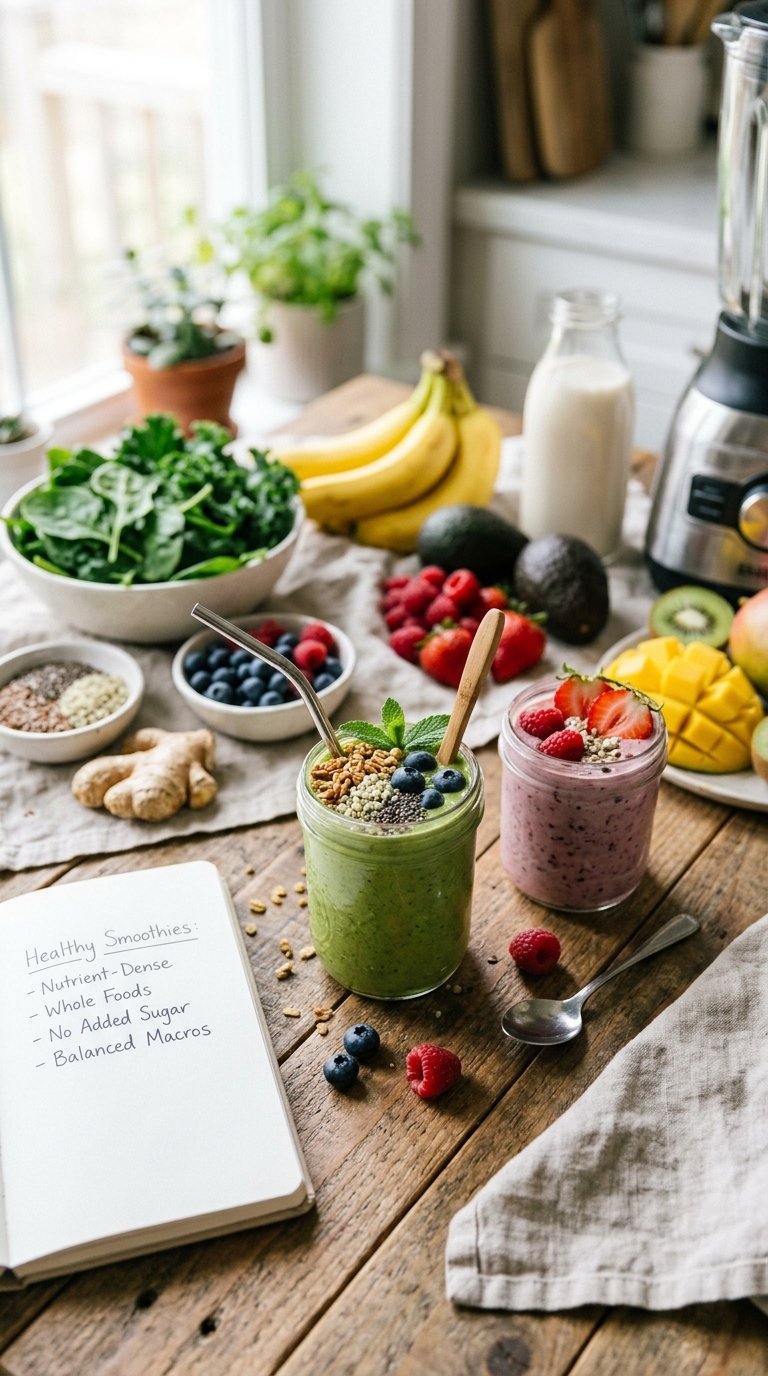
Before we get to the fun part of throwing ingredients into a pitcher, we need to talk about the science of a good blend.
Beyond just fruit: The importance of balanced macronutrients (protein, fats, carbs)
Fruit provides excellent fast-acting energy and micronutrients, but fruit alone will leave you hungry by 10 AM. To build a meal in a glass, you must include all three macronutrients. Complex carbohydrates come from your fruits and veggies. Protein repairs muscle and signals to your brain that you are full. Healthy fats slow down the absorption of sugar, providing a slow drip of sustained energy.
The hidden sugar trap: Identifying and avoiding unhealthy smoothie additions
The quickest way to ruin healthy smoothie recipes is by using the wrong liquids and bases. Avoid fruit juices, agave nectar, flavored yogurts, and sweetened milks. These additions spike your insulin, leading to a mid-morning crash. Stick to whole, unsweetened ingredients.
Maximizing nutrient density: Packing in vitamins, minerals, and antioxidants
Every ingredient should earn its place in your cup. By choosing dark leafy greens, vibrant berries, and seeds, you are flooding your cells with antioxidants that fight inflammation and boost cellular health.
Fiber power: Why it’s crucial for digestion, satiety, and blood sugar control
Unlike juicing, which strips away the roughage, blending retains the fiber of your produce. Fiber acts as a net, slowing down the release of natural fruit sugars into your bloodstream while keeping your digestion regular and your stomach happily full.
The Essential Building Blocks for Your Nutritious Smoothie Recipes
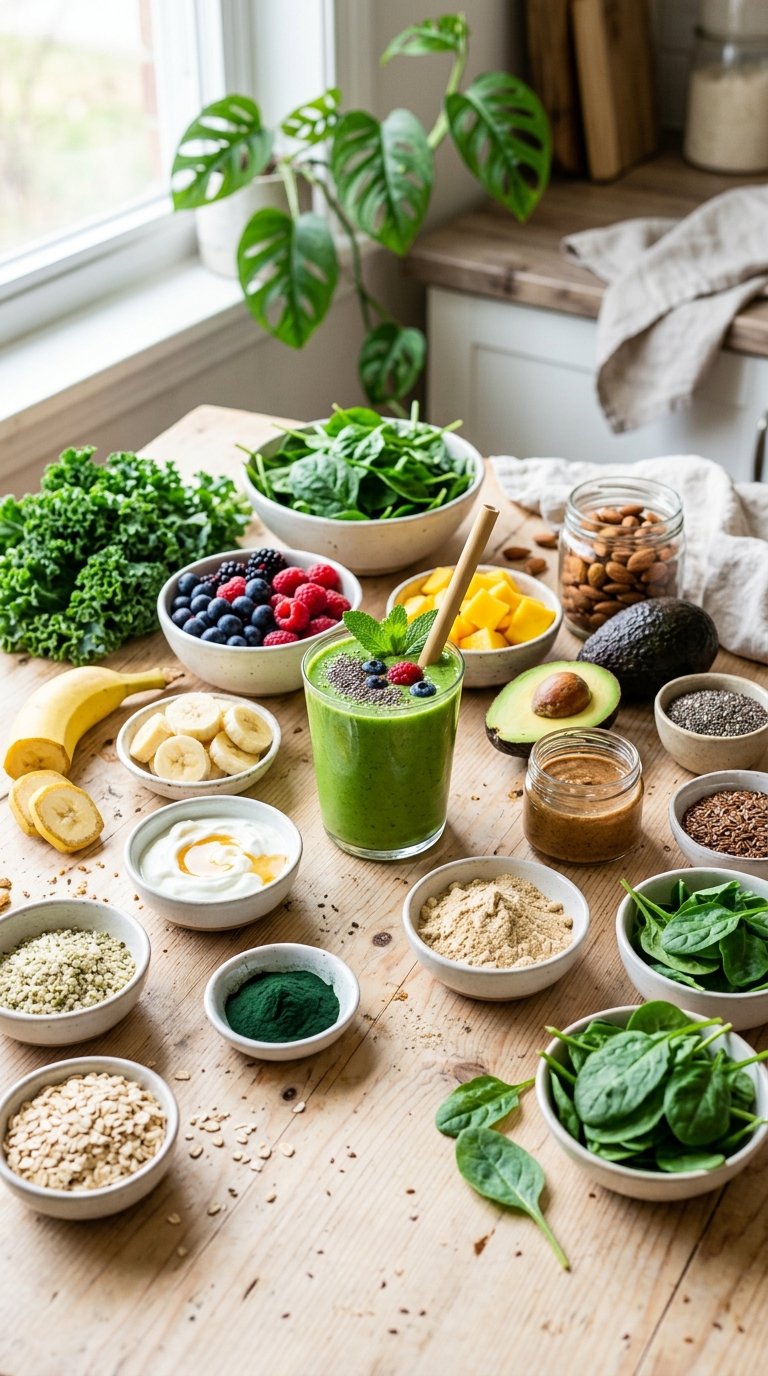
Think of this as your master grocery list. Keep a mix of these items stocked, and you’ll never be more than five minutes away from a perfect meal.
1. Liquid Base: Hydration without the extra calories
Ditch the orange juice. Instead, use filtered water, unsweetened almond or oat milk, coconut water, or even chilled green tea for an antioxidant kick.
2. Protein Sources: For satiety and muscle repair
If you want your smoothie to act as a meal replacement, protein is non-negotiable. Add a scoop of high-quality protein powder, a half-cup of plain Greek yogurt, silken tofu, or a tablespoon of hemp seeds.
3. Healthy Fats: Sustained energy and nutrient absorption
Fats make smoothies incredibly creamy while keeping you satiated. Toss in a quarter of an avocado, a spoonful of almond butter, chia seeds, flax seeds, or even a teaspoon of raw coconut oil. A quality Multifunction Hand Juicer with Pomace Separator makes this quick and easy.
4. Fruits: Natural sweetness and antioxidants
Berries are the gold standard because they are high in fiber and low in sugar. Bananas, mangoes, and pineapples offer fantastic flavor and creaminess, but practice moderation. Keep your total fruit portion to about one cup per serving.
5. Vegetables: Sneak in the greens
This is where the magic happens. A handful of spinach blends seamlessly without altering the flavor. Want to level up? Try adding frozen zucchini slices or riced cauliflower; they add a thick, frosty texture without adding any vegetal taste.
6. Boosters & Superfoods: Elevate your blend
A pinch of cinnamon helps regulate blood sugar. Fresh ginger or turmeric fights inflammation. Cacao powder satisfies chocolate cravings, while spirulina or maca root offers unique, potent health benefits.
Crafting Your Perfect Healthy Smoothie: A Step-by-Step Methodology
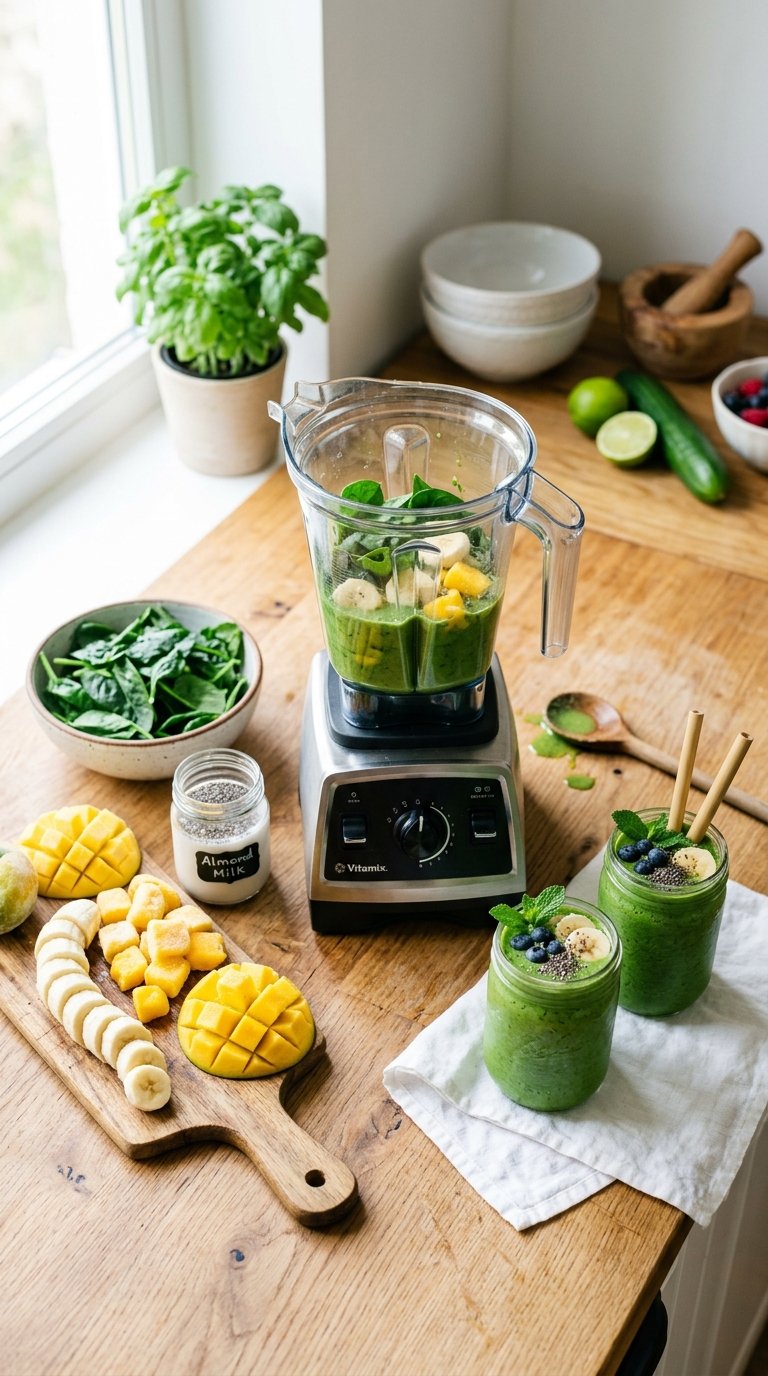
Throwing everything in at once is a rookie mistake. Proper technique changes everything from the flavor profile to the wear and tear on your blender.
The ideal ratio: Balancing ingredients for optimal taste and texture
A foolproof starting formula is: 1 cup liquid + 1 cup greens + ½ cup frozen fruit + 1 serving protein + 1 serving fat. This ensures a balanced macro profile and a consistently great texture.
Layering for optimal blending: The ‘liquid first’ rule and beyond
Always pour your liquid in first. Follow this with your powders (like protein or cacao) so they don’t stick to the lid. Next, add your leafy greens and soft ingredients. Finally, top it off with frozen fruits and ice. The weight of the frozen items pushes everything down into the blades, creating a vortex that guarantees a smooth blend.
Smart sweetening strategies: Natural alternatives to refined sugar
If your blend tastes a bit too “green,” don’t reach for the honey bear. Try adding a single pitted Medjool date, a splash of vanilla extract, or a dash of pure stevia or monk fruit.
Achieving your desired consistency: Thick, thin, or meal-replacement ready
Prefer a drinkable smoothie? Add more liquid. Want a thick, luxurious smoothie bowl you can eat with a spoon? Reduce your liquid by half and rely heavily on frozen ingredients like avocado or banana.
Equipment essentials: Choosing the best blender for your healthy smoothie journey
While a high-speed blender (like a Vitamix or Blendtec) will pulverize berry seeds and tough kale stems into silk, you don’t need a $400 machine to make great healthy smoothie recipes. A standard blender works fine—just blend your liquid and greens together first until smooth before adding the rest of your ingredients.
Top Healthy Smoothie Recipes for Every Goal & Craving
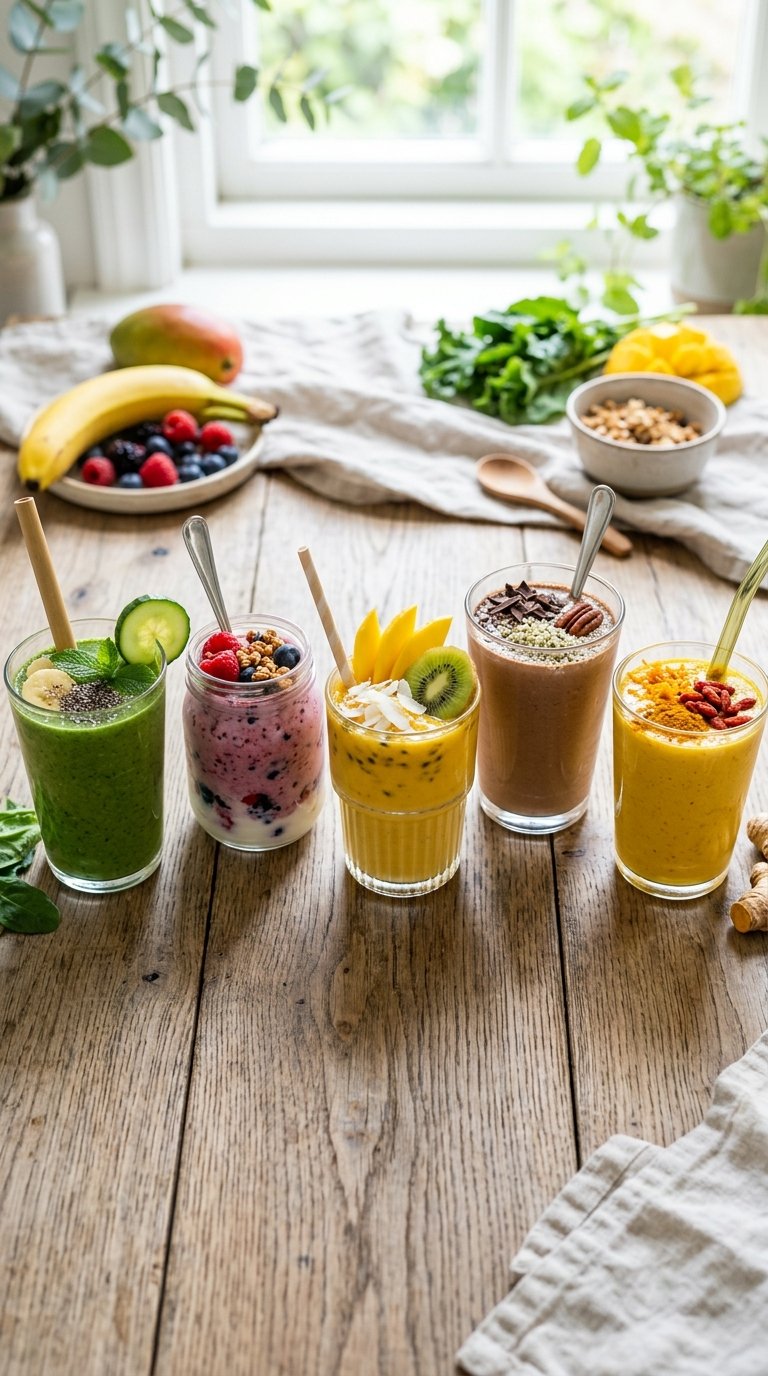
Here is a curated collection of healthy smoothie recipes tailored to exactly what your body needs on any given day.
1. The ‘Weight Loss Warrior’ Smoothie
High in fiber and protein to curb cravings. Blend 1 cup unsweetened almond milk, 1 scoop vanilla protein powder, 1 cup spinach, ½ cup frozen mixed berries, and 1 tablespoon ground flaxseed.
2. The ‘Energizing Morning Kick’ Smoothie
Sustained energy without the caffeine jitters. Combine 1 cup oat milk, ½ frozen banana, 1 tablespoon almond butter, 1 teaspoon maca powder, and a dash of cinnamon. A quality USB Rechargeable Smoothie Blender makes this quick and easy.
3. The ‘Immunity Booster’ Smoothie
Fortify your defenses with vitamin C. Blend ½ cup water, ½ cup orange segments, ½ cup frozen mango, 1 small carrot (chopped), and a ½-inch knob of peeled fresh ginger.
4. The ‘Gut Health Guru’ Smoothie
Probiotic power for happy digestion. Mix 1 cup plain kefir (or probiotic yogurt), ½ cup fresh papaya, 1 tablespoon chia seeds, and a handful of mint leaves.
5. The ‘Kids-Friendly & Hidden Veggie’ Smoothie
A delicious “chocolate milkshake” disguise. Blend 1 cup milk of choice, 1 scoop chocolate protein powder (or 2 tbsp cacao powder), ½ frozen banana, ¼ avocado, and a large handful of mild spinach. They will never taste the greens!
6. The ‘Post-Workout Powerhouse’ Smoothie
Muscle recovery made easy. Blend 1 cup coconut water, 1 scoop whey or plant protein, ½ cup frozen tart cherries (great for reducing muscle soreness), and 1 tablespoon walnut butter.
7. The ‘Detox & Cleansing’ Smoothie
Light, hydrating, and refreshing. Blend 1 cup water, ½ cucumber, 1 stalk celery, ½ green apple, the juice of half a lemon, and a handful of parsley.
8. The ‘Quick & Easy 3-Ingredient’ Smoothie
Perfect for chaotic mornings. 1 cup soy milk (for natural protein), 1 frozen banana, and 2 tablespoons of natural peanut butter. Done in 60 seconds.
Smoothie Prep Hacks & Storage Tips for Busy Lifestyles
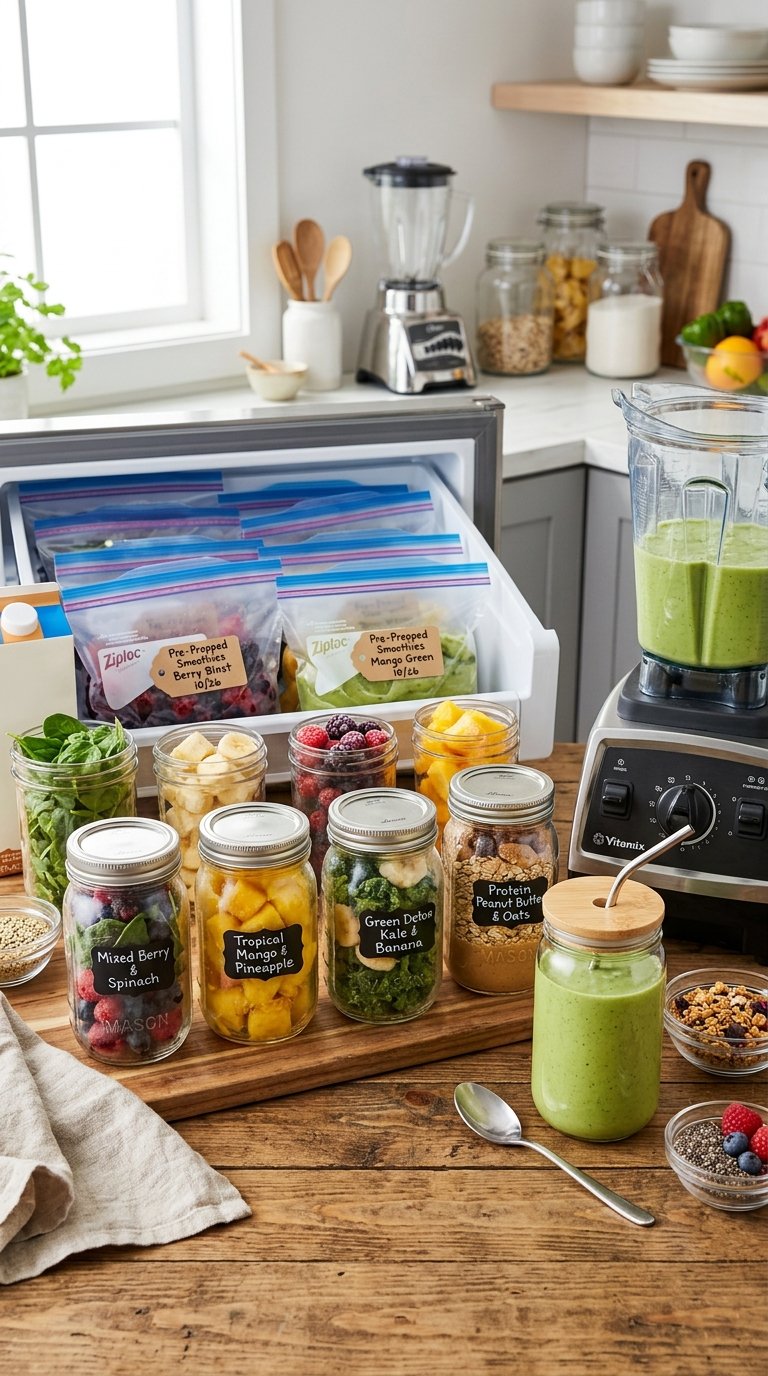
You have the recipes. Now, let’s make executing them entirely frictionless.
Pre-portioned freezer packs: Your ultimate time-saver for healthy smoothies
On Sunday, line up five ziplock bags or reusable silicone pouches. Portion out your greens, fruits, and superfoods into each bag and toss them in the freezer. In the morning, simply dump one pack into your blender, add your liquid and protein, and blend.
Batch blending strategies: When to blend ahead and when to blend fresh
While blending fresh yields the best texture, you can certainly batch-blend. If you do, avoid adding ingredients that gel heavily over time, like massive amounts of chia or flax, unless you want a pudding consistency the next day.
Optimal storage solutions: Keeping your smoothies fresh and nutrient-rich
Oxygen is the enemy of antioxidants. If you make a smoothie the night before, pour it into a glass mason jar and fill it to the absolute brim so there is no air gap at the top. Seal it tightly and refrigerate for up to 24 hours. Give it a good shake before drinking.
Smart shopping for healthy smoothie ingredients: Save time and money
Buying fresh berries out of season is expensive. Hit the freezer aisle! Frozen produce is picked at peak ripeness and flash-frozen, meaning it’s often more nutrient-dense (and cheaper) than fresh. Buy your seeds and nuts in bulk to cut down on costs.
Common Healthy Smoothie Mistakes to Avoid (And How to Fix Them)
Even well-intentioned blenders can fall into a few common traps.
Mistake #1: Overloading on fruit \u2013 the hidden sugar spike trap
It’s easy to toss in a whole banana, a cup of strawberries, and a handful of pineapple. But that much fruit will spike your blood sugar. The Fix: Stick to a 2:1 ratio of vegetables to fruit.
Mistake #2: Forgetting protein and healthy fats \u2013 why your smoothie isn’t filling
A smoothie of just almond milk, spinach, and blueberries is a nice snack, but it has almost zero calories from fat or protein. The Fix: Always cross-check your blender for a fat source (like nuts) and a protein source before you hit the power button.
Mistake #3: Not enough greens \u2013 missing out on vital nutrients
If your smoothie isn’t at least a little bit muddy in color (or bright green!), you’re missing out. The Fix: Pack the spinach down into your measuring cup. It blends down to nothing.
Mistake #4: Watery, chunky, or gritty textures \u2013 mastering your blender and ingredient order
Nobody likes chewing their smoothie. The Fix: Follow the layering rule (liquids first). If it’s still chunky, you need a splash more liquid to get the vortex moving.
Mistake #5: Getting stuck in a rut \u2013 embracing variety for sustained benefits
Eating the exact same spinach and banana smoothie every day limits your micronutrient intake. The Fix: Rotate your greens. Switch from spinach to kale to Swiss chard weekly to ensure you are getting a diverse range of vitamins and minerals.
Frequently Asked Questions About Healthy Smoothie Recipes
Can healthy smoothies truly replace a meal? (And how to make them nutritionally complete)
Absolutely. As long as your smoothie contains at least 20-30 grams of protein, 10-15 grams of healthy fats, and a solid dose of fiber-rich complex carbs, it is nutritionally equivalent to a balanced plate of food.
Are store-bought or bottled smoothies genuinely healthy?
Usually, no. Most commercial smoothies are pasteurized (which kills certain heat-sensitive nutrients), stripped of their fiber, and loaded with cheap fruit juice concentrates. Homemade is always superior.
How much fruit is too much in a healthy smoothie?
A good rule of thumb is to cap your fruit at ½ cup to 1 cup per serving. This provides plenty of flavor and natural sweetness without tipping the scales into sugar-crash territory.
What’s the best time of day to drink a healthy smoothie?
There is no wrong time! They are perfect for a fast breakfast, an easily digestible pre-workout snack, or a nutrient-replenishing post-workout meal.
Can I add ice to my smoothie without diluting the flavor?
Yes, but use it sparingly. A better trick is to freeze your leftover coffee, almond milk, or coconut water in ice cube trays. You get the frosty chill without watering down your masterpiece.
Are green smoothies always healthier than fruit smoothies?
Not necessarily. While green smoothies generally contain less sugar, a fruit smoothie balanced with Greek yogurt, chia seeds, and unsweetened milk is still an incredibly healthy choice. It all comes down to the macro balance.
Conclusion: Your Journey to a Healthier You Starts with a Blend
Recap of key takeaways for mastering delicious and healthy smoothie recipes
Mastering the blender isn’t about rigid dieting; it’s about smart assembly. By ditching the sugary juices, embracing the power of greens, and prioritizing a balance of protein, healthy fats, and fiber, you transform a simple beverage into a foundational pillar of your daily health routine.
Encouragement to experiment, customize, and make healthy blending a sustainable habit
Don’t be afraid to play with your food. The frameworks provided here are your canvas. If you hate bananas, use frozen avocado for creaminess. If you love chocolate, embrace raw cacao. The best healthy smoothie recipes are the ones you actually look forward to drinking every single day.
Call to action: Start blending your perfect healthy smoothie today!
You have the blueprints, the pro tips, and the recipes. So grab your blender, raid your fridge, and start mixing. Your body—and your tastebuds—will thank you. Happy blending!