15 Healthy Turmeric and Ginger Recipes You Will Love
15 Healthy Turmeric and Ginger Recipes You Will Love
Welcome to my kitchen, where we focus on bright, restorative whole foods. If you are searching for flavorful turmeric and ginger recipes, you have arrived at the exact right place.
I recall the first time I cooked with these raw rhizomes. My hands turned yellow for days, and the resulting meal tasted overly astringent because I grated way too much into the stockpot.
After extensive trial and error, I mastered the ratio of these bold flavors. Now, my family regularly requests my spiced chicken broth when the temperature drops during the winter months.
These wholesome dishes provide immense depth to your weekly menu. You will discover diverse turmeric and ginger recipes here, ranging from morning porridges to savory dinners that require minimal cleanup.
This post may contain affiliate links. If you purchase through these links, I may earn a small commission at no extra cost to you. I only recommend products I personally use and love. See my full disclosure policy for details.
Why Combine These Two Powerful Superfoods?
Pairing these underground stems yields a mutually beneficial flavor profile while boosting potential wellness perks. Both belong to the Zingiberaceae botanical family, making them natural companions in various culinary applications.
Ginger delivers a sharp, peppery bite that enlivens a heavy dish. Meanwhile, its golden cousin brings a grounded, slightly mustard-like base that anchors the flavor.
In many classic turmeric and ginger recipes, the zesty notes of one counterbalance the heavy earthiness of the other. Beyond taste, this specific pairing is renowned for supporting general health.
According to the Harvard T.H. Chan School of Public Health, curcumin possesses notable anti-inflammatory properties. Simultaneously, research published by the National Institutes of Health highlights gingerol for its potent antioxidant effects.
I often crush them together using a Natural Bamboo Mortar and Pestle Set. This manual technique extracts their essential oils effectively before applying heat.
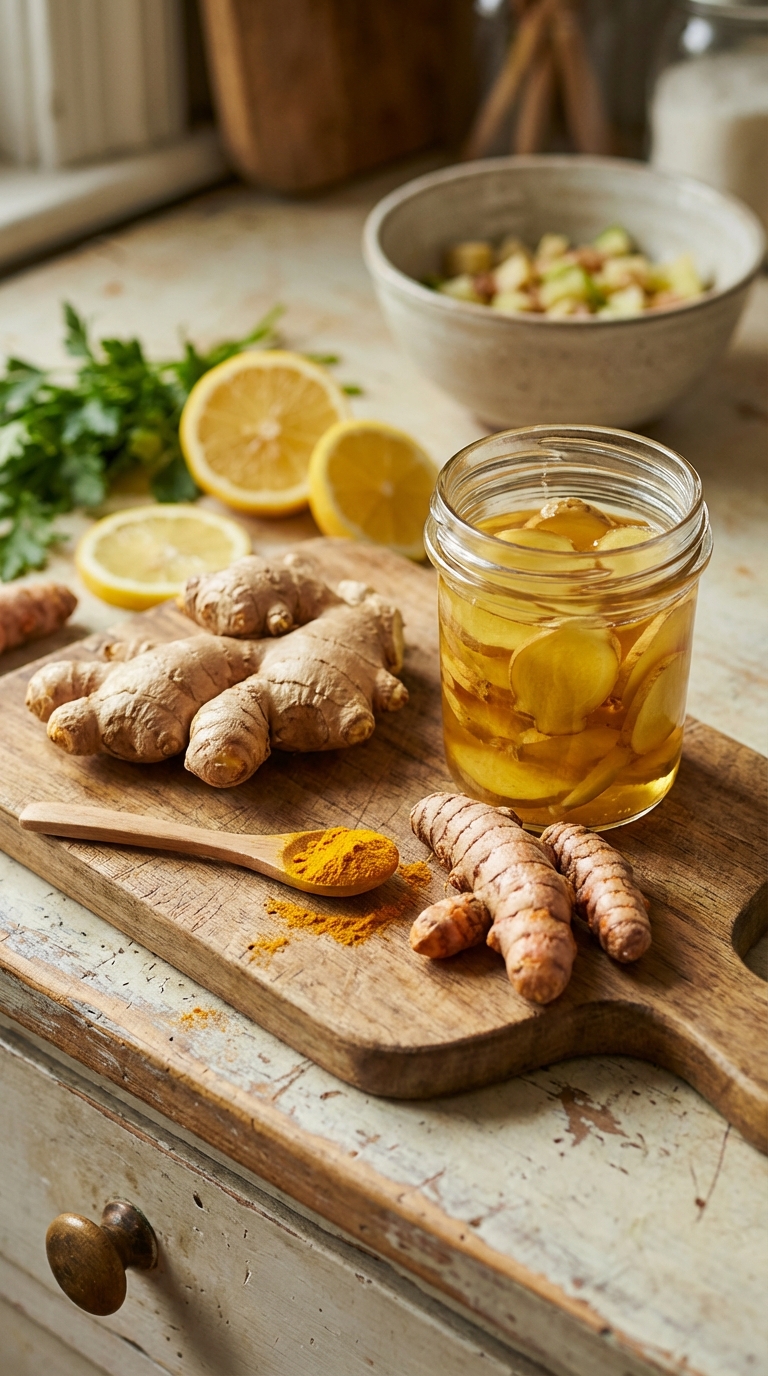
Practical tip: Peel these roots using the edge of a standard metal spoon to minimize waste and navigate around the knobby bumps.
Essential Components for Morning Meals
The foundation of a restorative morning meal relies on fresh produce, beneficial lipids, and a dash of piperine from black pepper. You cannot merely scatter golden powder over dry cereal and anticipate optimal absorption.
These active compounds require a lipid carrier, such as coconut cream or whole-milk yogurt, to enter your bloodstream efficiently.
When I first began creating turmeric and ginger recipes, my morning smoothies felt terribly gritty. I eventually learned to dissolve the raw spices in a teaspoon of warm water beforehand.
Integrating these pungent aromatics into warm grain bowls establishes a fantastic trajectory for the day. You can also blend them into anti-inflammatory smoothies.

Practical tip: Always bloom your dry spices in a teaspoon of coconut oil before whisking them into your morning porridge or eggs.
The Best Turmeric and Ginger Recipes to Start Your Day
A carrot-spiced morning muffin stands out as a phenomenal introduction to baking with these stems. The tender crumb bursts with cinnamon undertones and a lively kick from the freshly shredded roots.
I spent weeks tweaking this specific batter to achieve the proper texture. Fresh rhizomes introduce an unexpected amount of moisture to baked goods, requiring careful flour adjustments.
My children eagerly consume these snacks before heading to school every morning. You will appreciate how these turmeric and ginger recipes infuse your home with an inviting, bakery-like aroma.

Practical tip: Wear disposable food-safe gloves when grating the vibrant orange root to prevent your fingernails from staining permanently.
Wholesome Soups and Savory Broths
A restorative chicken and wild rice soup provides exceptional comfort during cold spells or recovery days. The broth reduces into a rich, golden liquid carrying the pungent heat of smashed roots.
I favor bone-in poultry cuts, gently poached until the meat separates effortlessly into tender strands. This slow-cooking approach builds a savory foundation that elevates standard celery and carrots.
Constructing exceptional turmeric and ginger recipes demands patience at the stove. You must start by gently sweating the aromatics in fat to release their fat-soluble flavor compounds into the base.
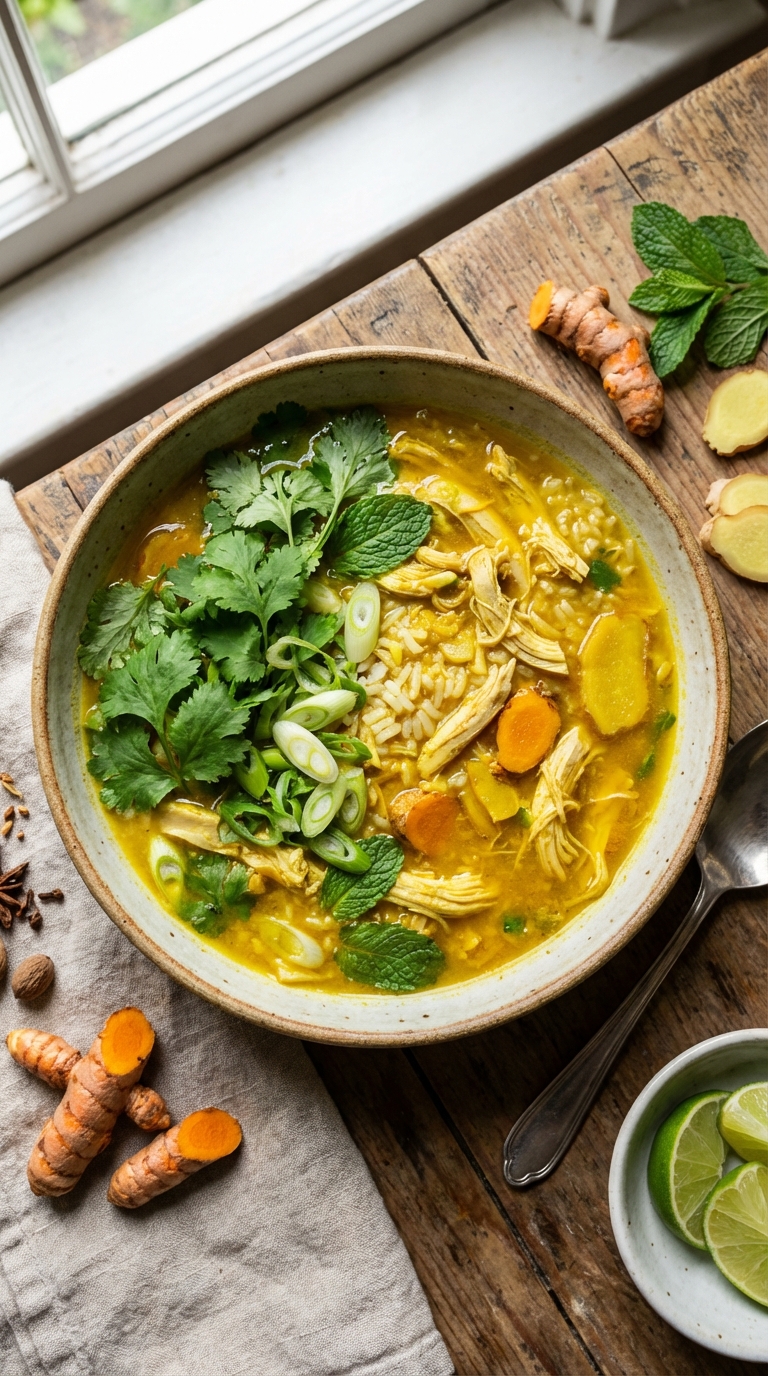
Practical tip: To get the clearest broth, simmer your soup on the lowest possible heat setting and regularly skim off any surface foam.
Salads Featuring Fresh Root Dressings
A crunchy curly kale salad tossed with a golden sesame vinaigrette offers massive texture and tangy complexity. This dressing offsets the natural astringency of raw greens via a rich, nutty sesame paste.
I prefer preparing the liquid mixture directly in a Large Capacity 4.7QT Glass Mixing Bowl to minimize dishwashing. Afterward, I just drop the washed leaves in and toss vigorously.
The sharp, zesty aromatics cut cleanly through the rich tahini base. You can revamp any mundane side dish by utilizing these robust turmeric and ginger recipes for your homemade dressings.
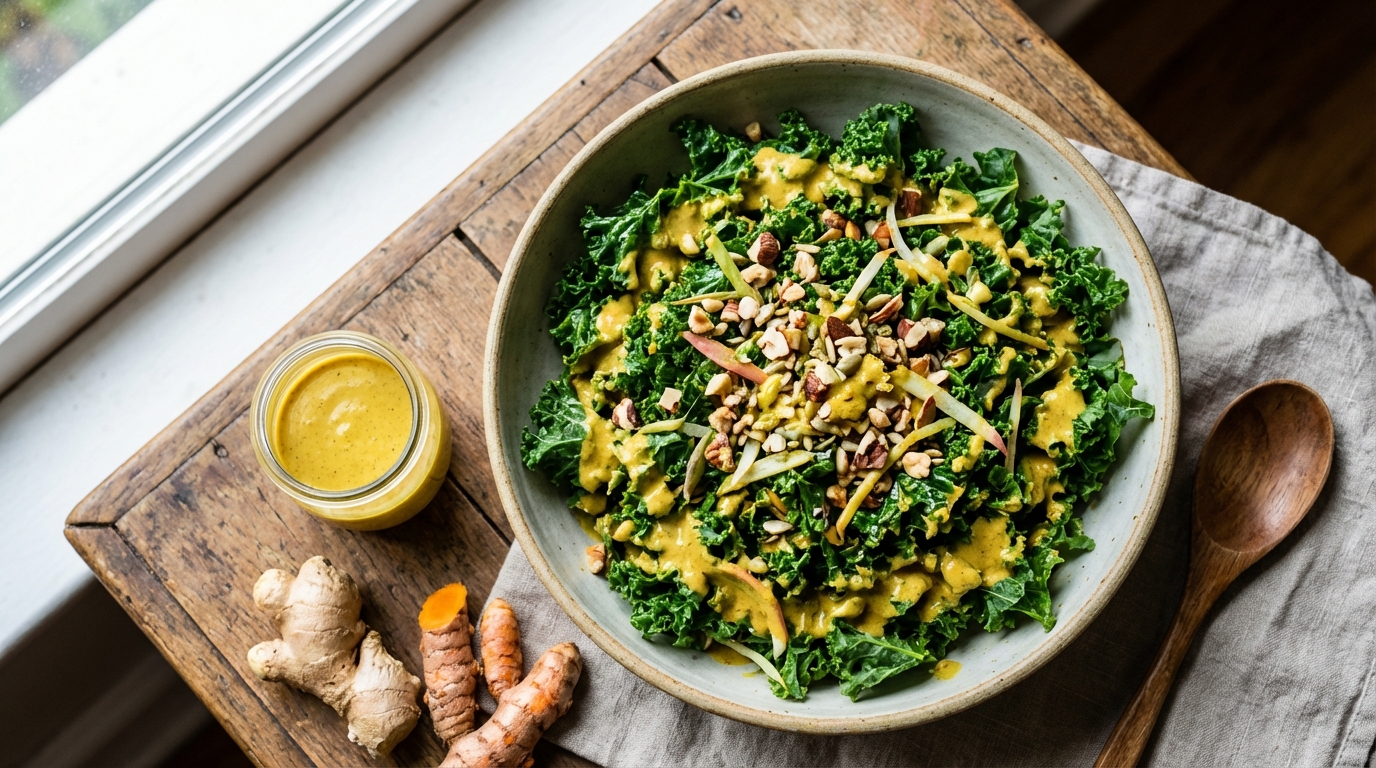
Practical tip: Massage the dressing into the raw kale leaves for exactly three minutes using your hands to physically break down the tough cellulose.
Plant-Based Bowls with High Fiber
A roasted sweet potato and garbanzo bean bowl delivers immense satisfaction alongside complex carbohydrates. The legumes bake until they form a crunchy exterior, while the potatoes soften and caramelize beautifully.
I coat them generously with the ground spices, adding a hint of cayenne before roasting at 400°F. The natural sugars within the tubers contrast beautifully against the warm, earthy spice blend.
Crafting fiber-rich turmeric and ginger recipes that genuinely taste delicious relies heavily on appropriate oven temperatures. Ensure your chickpeas are bone-dry before coating them in oil so they crisp rather than steam.
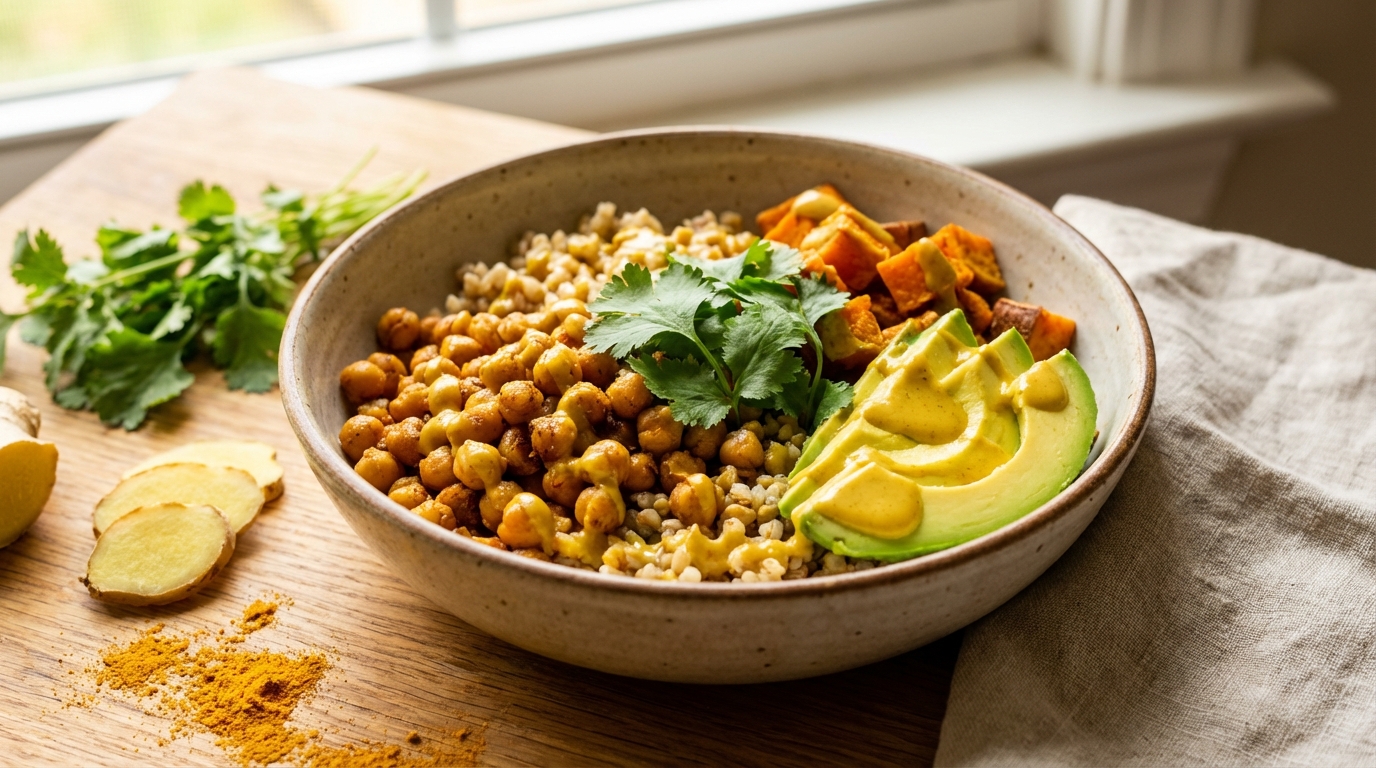
Practical tip: Spread the ingredients evenly across two baking sheets to prevent overcrowding, which allows hot air to circulate perfectly.
Mediterranean Diet Influences
Citrus-marinated white fish, baked inside parchment paper, captures the core principles of coastal dining. The seafood steams in its own moisture, soaking up the lemon juice, olive oil, and crushed roots.
I depend on this exact method for dinner gatherings because it yields flaky, moist fillets without demanding my attention. It appears sophisticated yet entails minimal hands-on effort in the kitchen.
These seafood-focused turmeric and ginger recipes illustrate how seamlessly Eastern flavor profiles merge with traditional ingredients. For more inspiration, explore our complete Mediterranean dinner guide.

Practical tip: Fold the parchment paper edges tightly into a half-moon shape to ensure no aromatic steam escapes during the baking process.
Hearty Chicken Dishes and Braises
One-skillet coconut-braised chicken thighs yield remarkably tender poultry engulfed in a velvety gravy. As the coconut milk simmers, it thickens into a luxurious sauce that clings to the savory meat.
I sear the cuts skin-side down in a preheated cast-iron pan first. This crucial step renders the fat, ensuring a crispy exterior before introducing the braising liquids.
You will likely crave these robust turmeric and ginger recipes regularly once you learn this straightforward braising technique. Leave the top third of the chicken exposed above the liquid line to maintain that crispy skin.
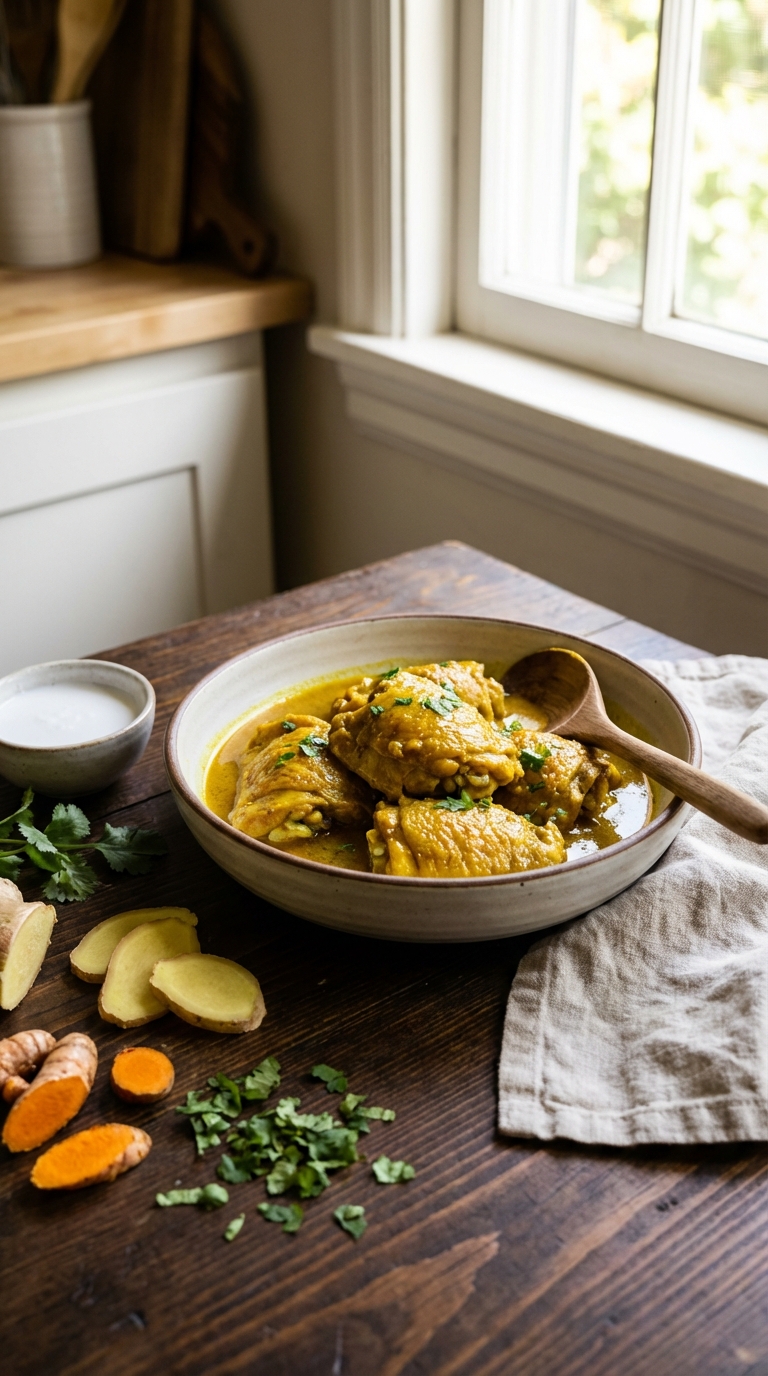
Practical tip: Use full-fat culinary coconut milk rather than the carton beverage version to achieve the correct sauce viscosity.
Quick Weeknight Options for Busy Homes
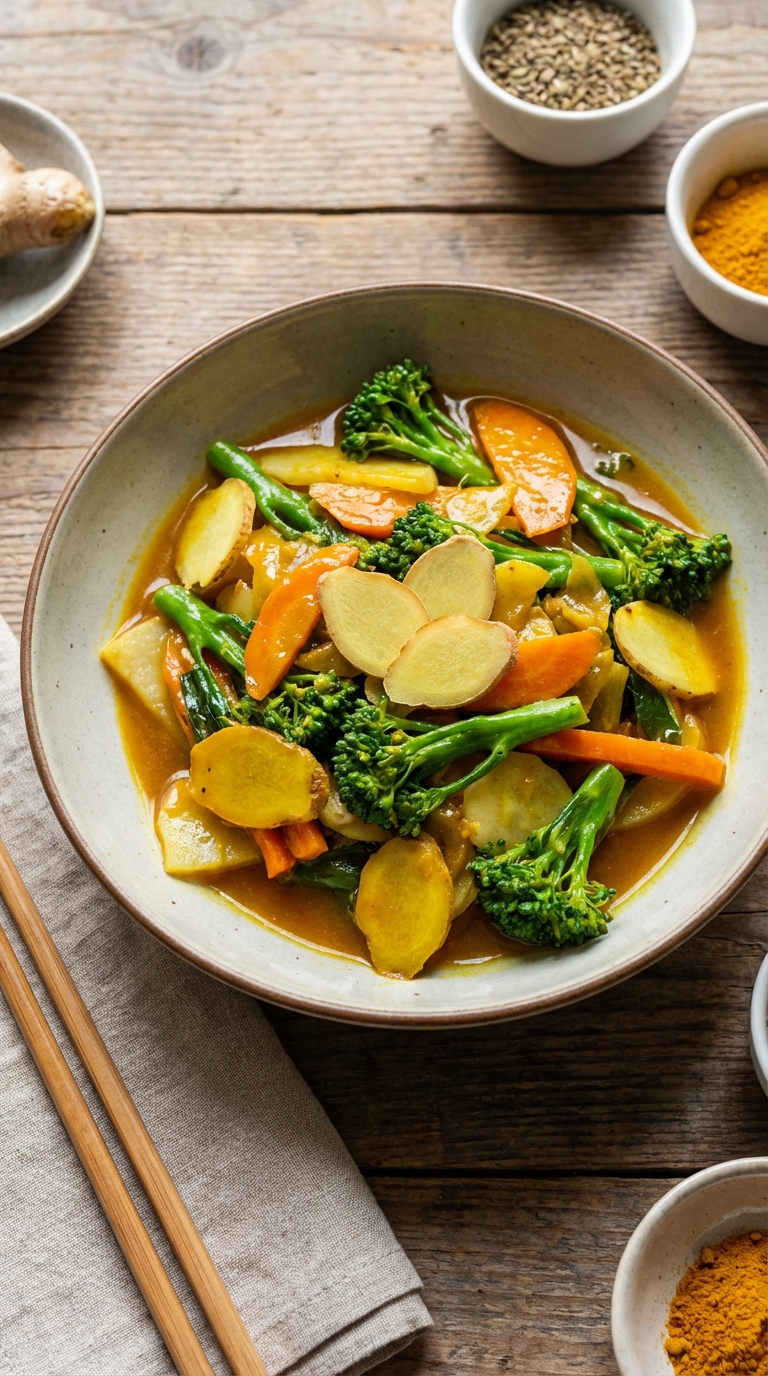
A dynamic vegetable stir-fry featuring a sticky, golden garlic glaze finishes in under twenty minutes. The broccoli florets and bell peppers stay crisp-tender while entirely enveloped by the glossy sauce.
I deploy a 12-in-1 Manual Food Chopper to expedite the vegetable preparation drastically. Consequently, the stovetop cooking phase becomes incredibly brief.
The lively glaze completely masks any bitterness from the cruciferous vegetables. Hectic households desperately need fast turmeric and ginger recipes to sustain their nutritional targets from Monday through Friday.
Practical tip: Mix your cornstarch and cold water slurry thoroughly right before pouring it into the hot wok to prevent unpleasant lumps.
Healing Teas and Restorative Tonics
A simmering saucepan of root tea, steeped with fresh citrus and unprocessed honey, provides swift relief for a scratchy throat. The boiling water pulls the essential oils directly from the sliced stems.
This traditional brewing process yields a brightly hued, intensely fragrant drink. Throughout the colder winter months, I store a concentrated batch of this liquid in my refrigerator.
When I feel a draft, I simply dilute a few ounces with boiling water. Exploring beverage-based turmeric and ginger recipes represents a brilliant strategy for effortless daily consumption.

Practical tip: Maintain a gentle simmer rather than a vigorous rolling boil to protect the delicate aromatic compounds.
How to Maximize Nutrient Absorption
Incorporating freshly ground black peppercorns alongside a beneficial lipid is imperative for proper nutrient uptake. The piperine alkaloid found in pepper drastically amplifies curcumin’s bioavailability within the human digestive tract.
According to the USDA FoodData Central, while these roots contain numerous trace minerals, your body struggles to absorb them raw. During my early culinary experiments, I completely neglected this scientific rule.
Today, I never bypass this vital combination step. Whenever you prepare turmeric and ginger recipes, view the cooking fat and pepper as the keys that unlock the dietary benefits.

Practical tip: Olive oil, avocado oil, and grass-fed butter all serve as excellent lipid carriers for these fat-soluble properties.
Meal Prep Advice for Staining Spices
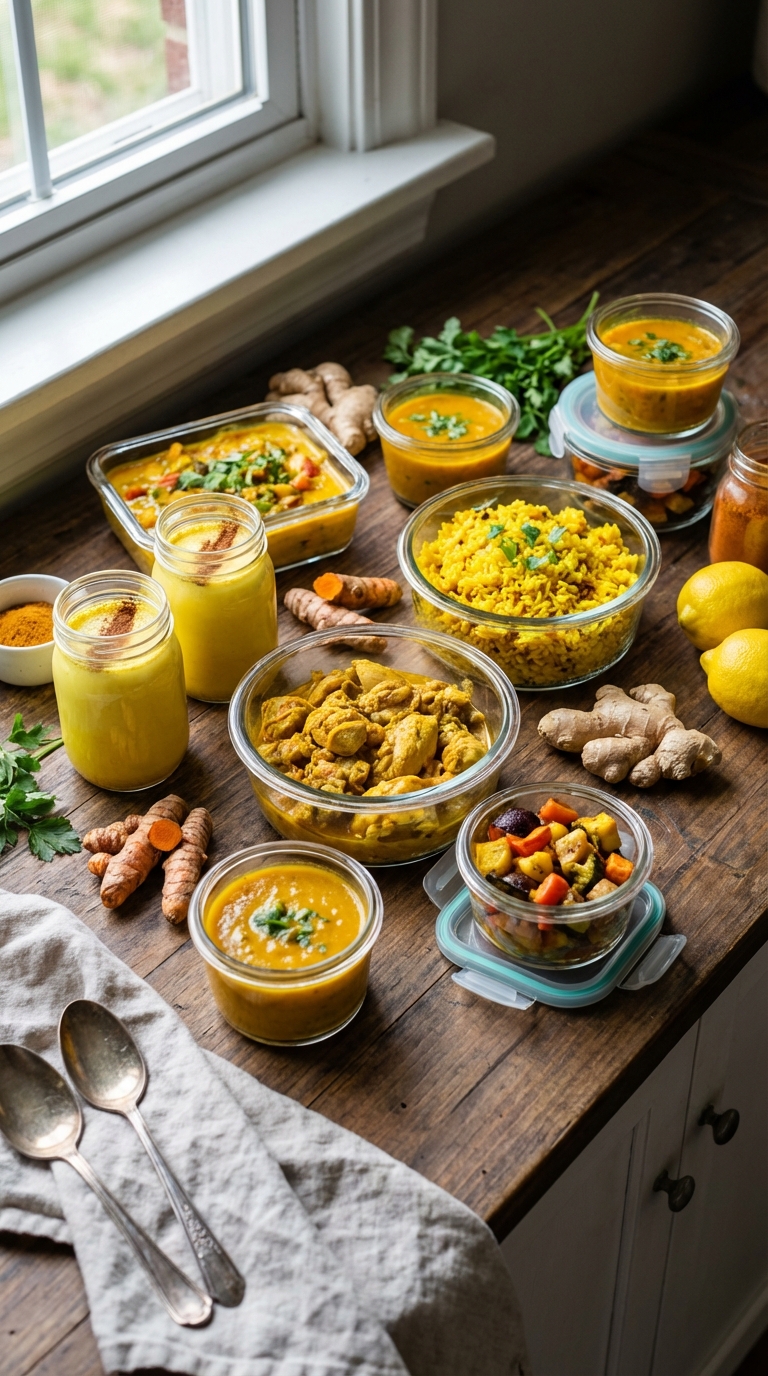
Storing your bulk-cooked portions inside glass receptacles stops the aggressive yellow pigments from permanently marking your containers. The micro-fine dust functions exactly like a potent commercial fabric dye.
Last year, I destroyed an entire set of expensive storage boxes after keeping a golden stew in them for just one night. Stainless steel or glass options are strictly non-negotiable for these particular meals.
Coordinating your weekly turmeric and ginger recipes demands proactive planning to preserve your kitchen surfaces. If you accidentally stain a countertop, apply a thick baking soda paste immediately.
Practical tip: Wash cutting boards and utensils in cold water first, as hot water can occasionally set the yellow stains deeper into porous materials.
Your Go-To List of Turmeric and Ginger Recipes
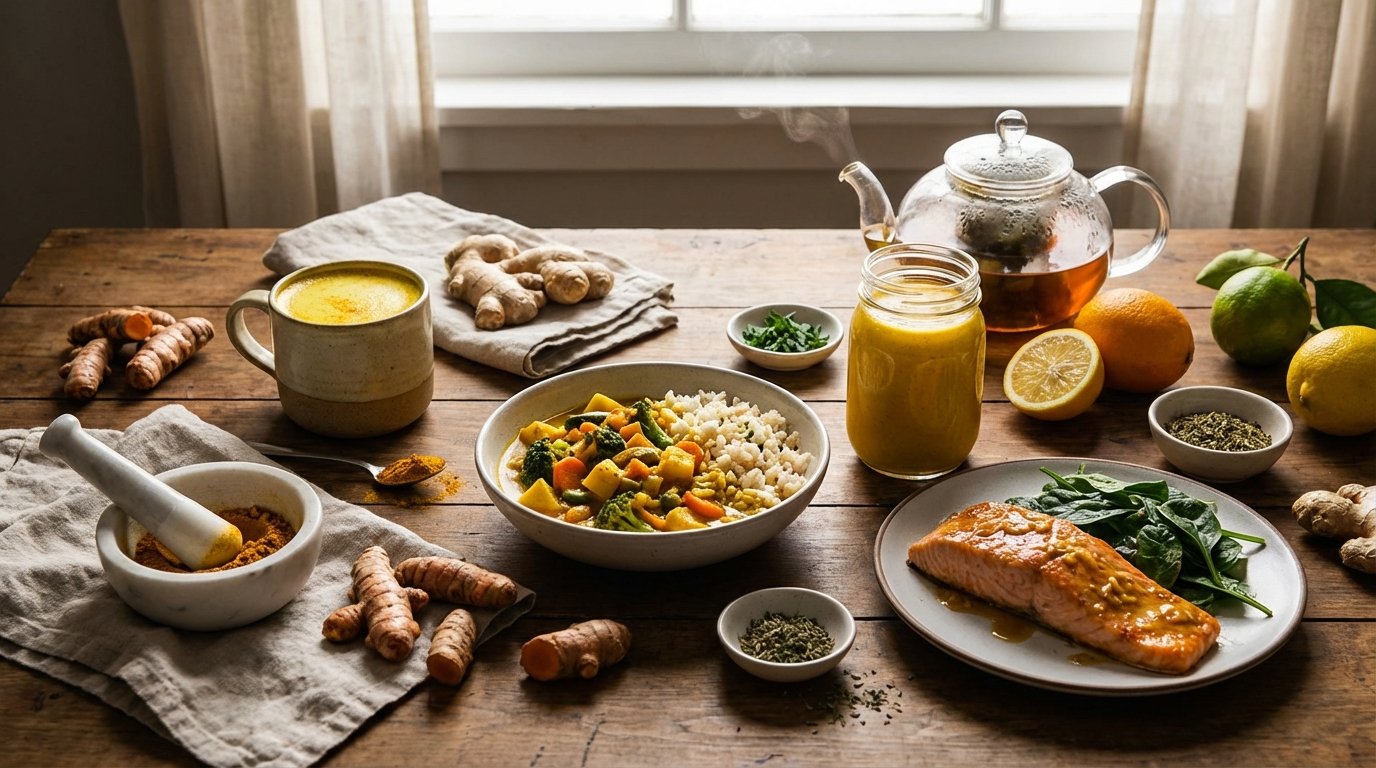
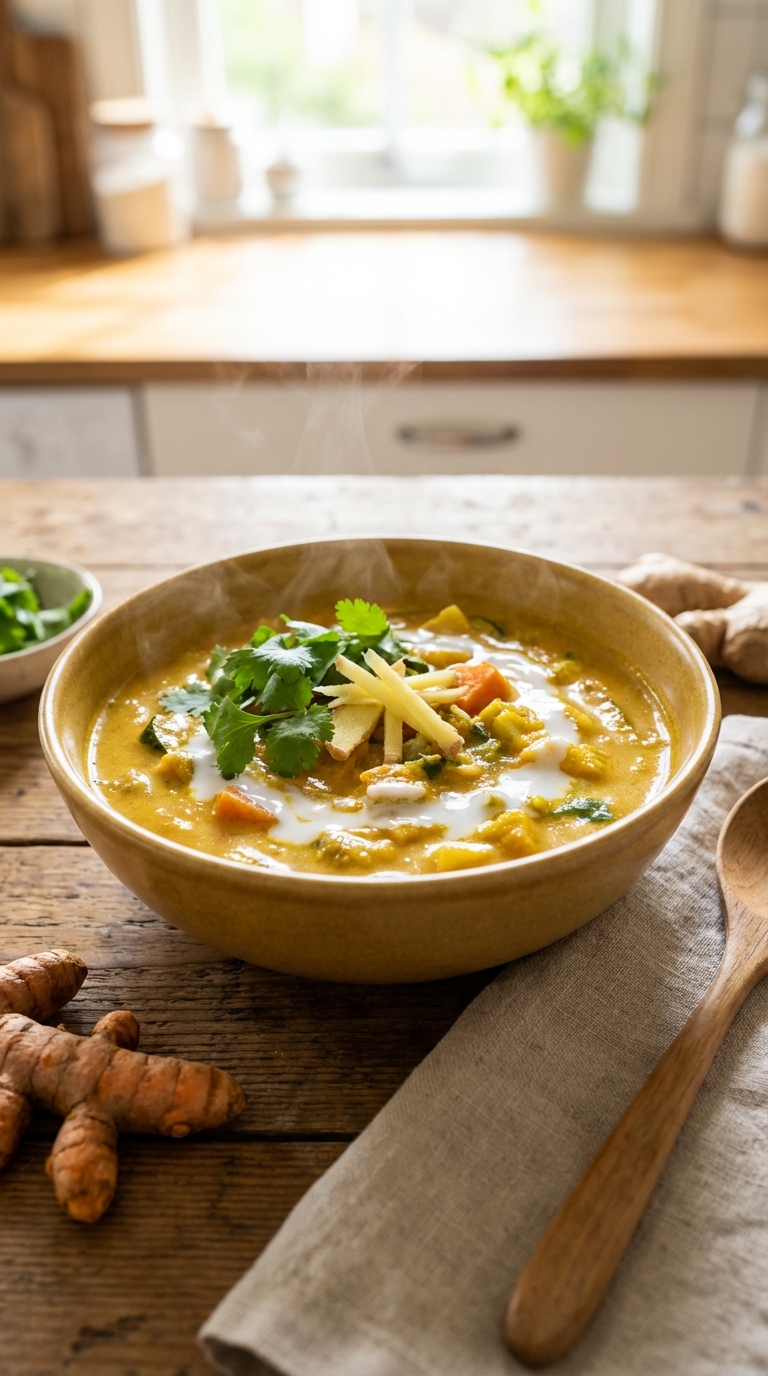
A robust coconut and root vegetable curry remains the ultimate platform for these potent underground stems. The fragrant, thick broth smothers sweet potato chunks and cauliflower florets in a captivating flavor matrix.
This specific meal originated from my grandmother’s weekend stews. I adjusted the proportions over several years to feature a much more prominent, peppery bite.
It feels incredibly satiating, happens to be entirely plant-based, and survives the freezing process flawlessly. This dish exemplifies the very best turmeric and ginger recipes available for a standard Wednesday evening. Try serving it alongside our homemade garlic naan.
Practical tip: Scrape the skin off your fresh roots directly over the trash bin, as the peels tend to stick stubbornly to sink surfaces.
Creamy Golden Coconut Vegetable Curry
Prep Time: 15 minutes
Cook Time: 25 minutes
Total Time: 40 minutes
Servings: 4
Calories: 320 per serving
Ingredients
- 2 tablespoons Coconut oil (unrefined)
- 1 medium Yellow onion (finely diced)
- 3 cloves Garlic (minced)
- 2 tablespoons Fresh ginger (peeled and finely grated)
- 1 tablespoon Fresh turmeric root (peeled and finely grated)
- 1 teaspoon Black pepper (freshly cracked)
- 1 large Sweet potato (peeled and cut into 1-inch cubes)
- 1 head Cauliflower (cut into bite-sized florets)
- 1 can (13.5 oz) Full-fat coconut milk
- 1 cup Vegetable broth (low sodium)
- 1 teaspoon Sea salt (plus more to taste)
- 1 tablespoon Fresh lime juice
- 1/4 cup Fresh cilantro (chopped, for garnish)
Instructions
- Heat the coconut oil in a large heavy-bottomed pot over medium heat for 2 minutes until fully melted and shimmering.
- Add the diced onion and sauté for 5-7 minutes until translucent, stirring frequently to prevent burning.
- Stir in the minced garlic, grated ginger, grated roots, and black pepper. Cook for exactly 1 minute until highly fragrant.
- Pour in the full-fat coconut milk and vegetable broth, whisking to combine the liquids with the spiced aromatics.
- Add the cubed sweet potato and cauliflower florets to the liquid. Bring the pot to a gentle boil over medium-high heat.
- Once boiling, reduce the heat to low, cover the pot with a tight-fitting lid, and simmer for 20-22 minutes. Test the potatoes with a fork for tenderness.
- Remove the pot from the heat and stir in the fresh lime juice to brighten the rich coconut broth.
- Taste and adjust the seasoning with additional sea salt if necessary. Serve hot over steamed rice, garnished with fresh cilantro.
Nutrition Facts (per serving)
Calories: 320 | Protein: 5g | Carbs: 28g | Fat: 22g | Fiber: 7g | Sugar: 8g | Sodium: 650mg
Storage
Allow the curry to cool completely before transferring it to glass airtight containers. Store in the refrigerator for up to 4 days. Reheat gently in a saucepan over medium-low heat until warmed through.
Recipe Notes
- You can substitute 1 teaspoon of ground turmeric powder and 1 teaspoon of ground ginger powder if you cannot locate fresh roots.
- To make this a complete meal-prep solution, cook a large batch of quinoa on Sunday to portion out all week.
- If you want to explore more turmeric and ginger recipes, mastering this beginner-friendly curry base is the perfect starting point.
Frequently Asked Questions
Navigating the culinary uses of these potent ingredients often brings up several common questions. From handling the intense pigments to properly balancing the strong flavor profiles, mastering these roots requires basic knowledge.
The most crucial aspect is understanding their varying intensity levels in fresh versus dried forms. I frequently receive messages asking how to tone down the underlying astringency of a ruined dish.
Whether you are curious about daily consumption safety or simply looking for the best storage methods, I have compiled everything you need. Below, you will find concise answers addressing the most common concerns about integrating turmeric and ginger recipes into your routine.
How To Use These Spices Safely in Cooking?
Start with small amounts, usually one-quarter teaspoon of powder for a standard family-sized meal. The earthy flavor can quickly overpower a dish and turn it unpleasantly bitter if you are heavy-handed. Always bloom the powder in a cooking fat to soften the raw edge.
Can I Substitute Fresh Root for Dried Powder?
Yes, you can easily substitute the fresh root when making turmeric and ginger recipes. The standard conversion ratio is one tablespoon of freshly grated root for every one teaspoon of dried powder. Fresh roots provide a brighter, slightly more floral flavor profile overall.
What Are the Best Dinner Options?
The most successful applications include coconut milk curries, roasted root vegetables, and braised poultry dishes. These spices excel in meals that require longer simmering times, allowing the sharp flavors to mellow. Savory soups also provide an excellent canvas for these warm profiles.
Are These Spiced Dishes Safe to Eat Daily?
Consuming culinary amounts of these ingredients in your daily meals is generally considered safe and highly beneficial for most people. However, if you take blood-thinning medications or have gallbladder issues, consult your physician before consuming massive amounts of highly concentrated golden spice supplements.
How Do I Properly Store Leftover Fresh Rhizomes?
Store unpeeled fresh roots in an airtight container inside the crisper drawer of your refrigerator, where they will last for up to three weeks. For longer storage, freeze the whole roots directly. You can simply grate what you need for future turmeric and ginger recipes while they remain frozen solid.